
 Free Quote
NEWS
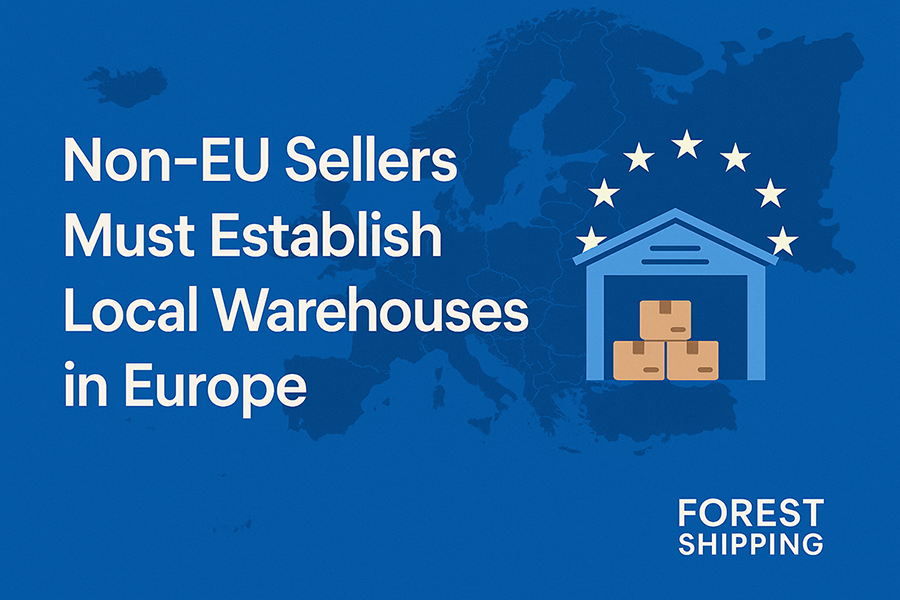
New EU Proposal Requires Non-EU Sellers to Establish Local Warehouses
Release time:2025-07-18 17:28
On July 17, the European Parliament approved a groundbreaking proposal aimed at tightening the supervision of cross-border e-commerce. With over 12 million parcels entering the EU daily—many of them shipped from platforms like Amazon and Temu—authorities are prioritizing transparency, traceability, and consumer safety. This move marks a significant shift in how non-EU sellers must operate within the European market.
Key Measures of the New Regulation
The new proposal sets forth several major regulatory changes:
- Mandatory Local Warehouses for Non-EU Sellers
Non-European merchants will be required to establish local warehouses within EU territory. This initiative is designed to streamline customs inspections and improve batch-level control over imported goods. Notably, major platforms like Amazon and Temu have already begun investing in local warehousing infrastructure, anticipating the shift in regulatory expectations.
- Abolition of the €150 VAT Exemption Threshold
Currently, items valued under €150 are exempt from import VAT—a loophole widely exploited through under-invoicing. According to EU reports, roughly 65% of daily parcels are underdeclared to avoid tax. The proposed removal of this exemption aims to restore fairness in cross-border competition and enhance revenue collection.
- Introduction of a €2 Handling Fee per Parcel
In a move to offset the operational costs of customs control, the EU is also exploring a fixed €2 processing charge per parcel. This fee would help fund stricter checks without disproportionately impacting consumers or domestic retailers.
- Tech-Driven Customs Supervision
To enhance oversight, the EU plans to invest in cutting-edge technologies such as artificial intelligence and blockchain. These tools will assist in screening the vast volume of transit packages—which make up 84% of cross-border shipments—more effectively and accurately.
Implications for Global Sellers and Logistics Providers
This regulation reflects a broader effort to strengthen product safety, combat tax fraud, and ensure regulatory consistency in the EU e-commerce space. While the final implementation details still require negotiation between the European Parliament and Council, it’s clear that businesses exporting to Europe will face increased compliance obligations.
For sellers, this means re-evaluating their logistics models, particularly those relying solely on direct-to-consumer shipping from non-EU origins. Establishing a local warehouse in Europe—either independently or through third-party logistics providers—will become not just a competitive advantage, but a legal necessity.
A Strategic Shift for Cross-Border E-Commerce
As the EU raises the bar for import transparency and safety, global sellers must act swiftly. Proactive investment in local warehousing and regulatory compliance will be essential for long-term success in the European market.
At FBABOX, we specialize in international freight forwarding, helping businesses ship goods from China to Europe efficiently and compliantly. Whether you're an established seller or new to the EU market, our team can assist you in navigating customs clearance, warehouse setup, and end-to-end logistics tailored to these new regulations.
RECOMMENDED ARTICLES

May 22,2025
Why the EU’s New €2 Handling Fee Could Shake Up Cross-Border E-Commerce

Feb 17,2025
U.S. Tariff Policy Changes Shift E-commerce Logistics to Europe
Feb 10,2025
Amazon Delivers Over 1 Billion Items "Same-Day or Next-Day" in the UK
Feb 08,2025
European E-commerce to Hit €565B by 2029, Led by UK & Germany

Jan 25,2025
2025 Amazon Europe: 30+ Sales Calendar Dates &Bestseller Tips

Dec 18,2024
Amazon Europe 2025 referral fees & FBA Fees Updates

With over 14 years of experience in e-commerce logistics industry, FBABOX has gained the expertise and knowledge to guarantee our customers' global and domestic shipping practices are efficient and effective.


CONTACT US
Copyright: FBABOX.COM 闽ICP备2025097571号-1